

*This webpage content is intended for Healthcare Professionals only, not for general public.
The Asian Working Group for Sarcopenia (AWGS) has released its 2025 consensus update, introducing new definitions, diagnostic criteria, and a stronger focus on muscle health promotion.
These updates aim to make sarcopenia assessment more streamlined, consistent, and applicable across diverse Asian populations — with an emphasis on early detection starting from midlife.
What’s New in the AWGS 2025 Consensus
The 2025 update harmonizes closely with the Global Leadership Initiative on Sarcopenia (GLIS) while tailoring recommendations for Asian populations. The focus has expanded beyond diagnosing sarcopenia in older adults to promoting lifelong muscle health.
Here are the key updates:
-
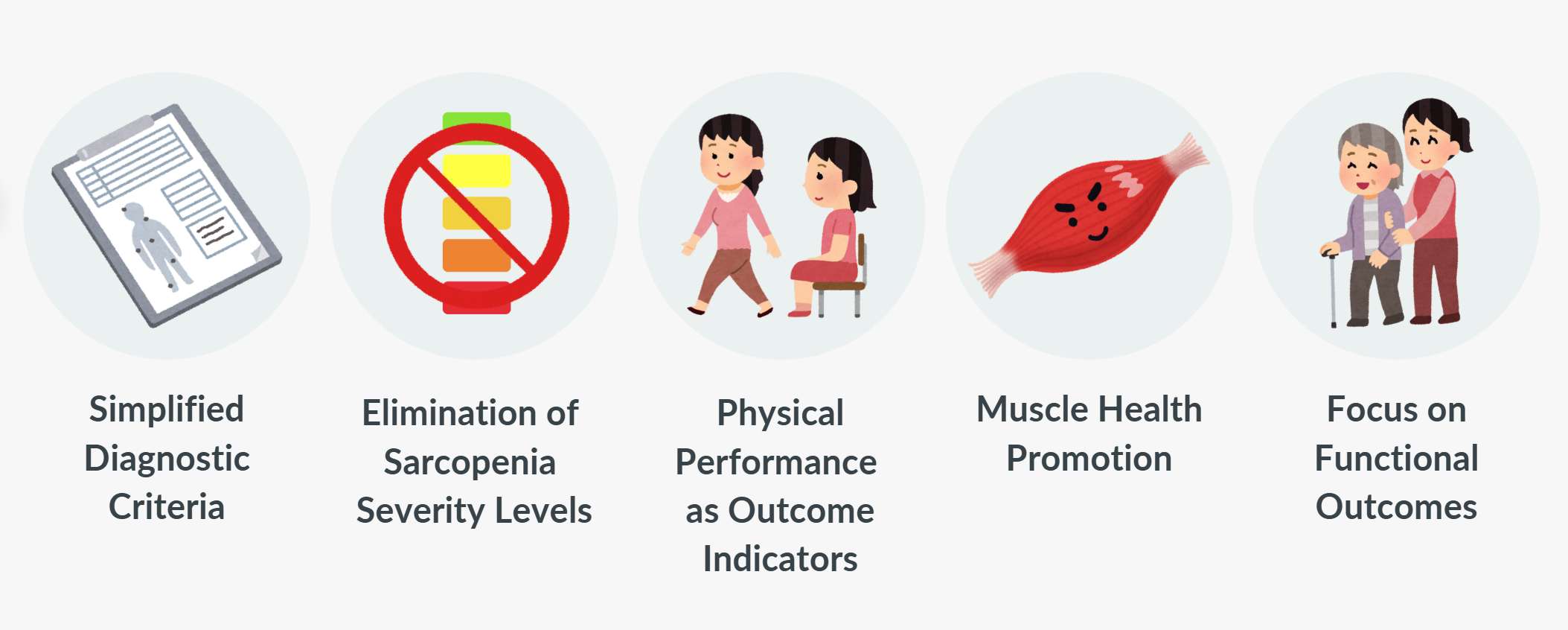
Simplified Diagnostic Criteria
Sarcopenia is now defined as concurrent low muscle mass and low muscle strength. Diagnosis now requires the presence of both low muscle mass and low muscle strength, streamlining the process and improving practicality for healthcare providers.
-
Elimination of Sarcopenia Severity Levels
The previous categories such as “normal” or “severe sarcopenia” have been removed. This leaves only three classifications: at risk of sarcopenia, possible sarcopenia and sarcopenia.
-
Physical Performance as Outcome Indicators
Measures like gait speed, five-time chair stand test, and the Short Physical Performance Battery (SPPB) are now categorized as outcome measures rather than the diagnostic criteria.
-
Muscle Health Promotion Over Disease Diagnosis and Treatment
The AWGS 2025 consensus expands its scope from diagnosing sarcopenia to promoting muscle health across the lifespan, starting as early as midlife. This update underscores the importance of maintaining muscle mass and strength for healthy aging and disease prevention.
-
Focus on Functional Outcomes for Monitoring Intervention Effectiveness
Healthcare practitioners should now track improvements in function and independence including mobility, daily activities, and quality of life to monitor the effectiveness of intervention programs.
Updated Cutoff Values in AWGS 2025
With the intention of promoting muscle health assessment in middle age, the AWGS 2025 consensus also introduces new cutoff values for individuals aged 50–64 years.
These values were derived from pooled analyses of multiple Asian cohorts using standardized methodologies consistent with those applied to adults aged ≥65 years.
These validated cutoffs now provide clear diagnostic criteria for sarcopenia in middle-aged adults, encouraging earlier detection and prevention before functional decline begins.
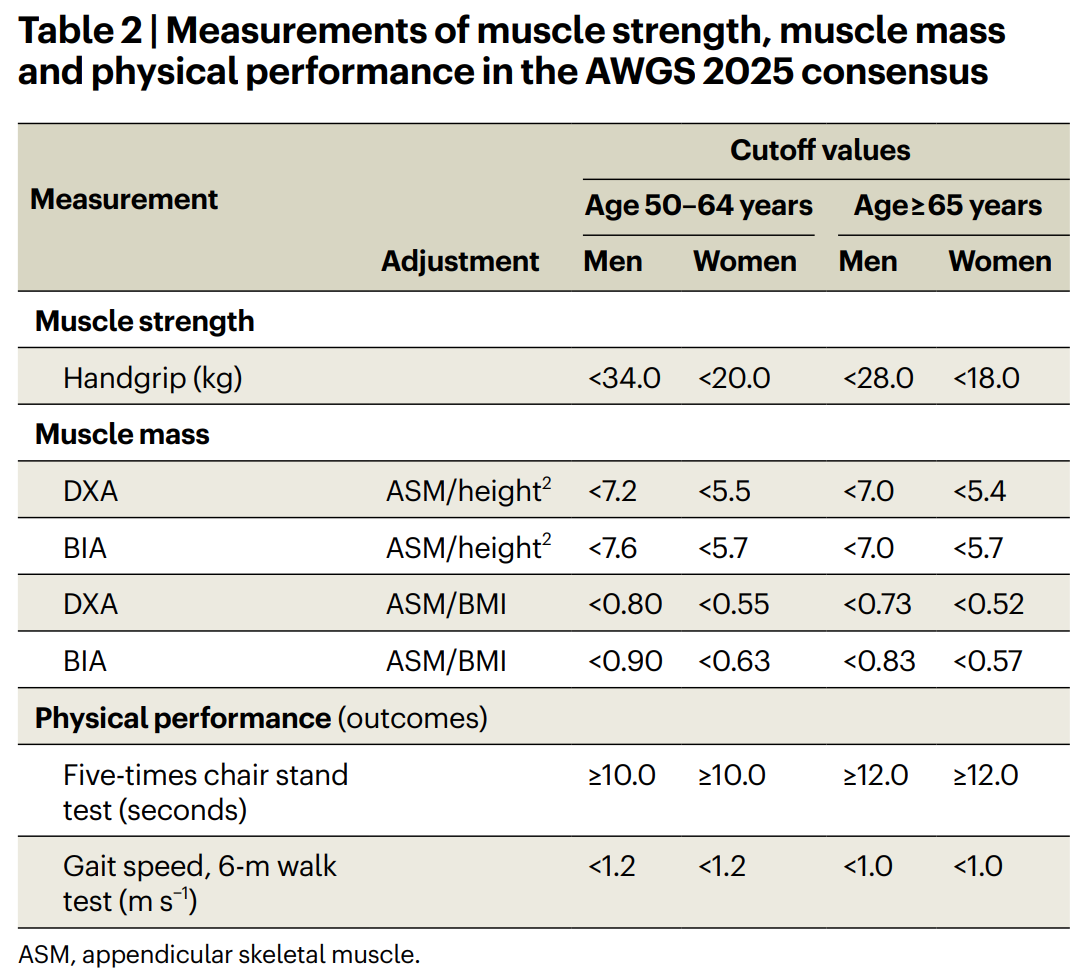 Source: Chen, L., Hsiao, F., Akishita, M., Assantachai, P., Lee, W., Lim, W. S., Muangpaisan, W., Kim, M., Merchant, R. A., Peng, L., Tan, M. P., Won, C. W., Yamada, M., Woo, J., & Arai, H. (2025). A focus shift from sarcopenia to muscle health in the Asian Working Group for Sarcopenia 2025 Consensus Update. Nature Aging. https://doi.org/10.1038/s43587-025-01004-y
These updated values make it possible for healthcare practitioners to screen for sarcopenia risk earlier, particularly among adults in their 50s — a critical stage for maintaining lifelong muscle health.
InBody Body Composition Analyzers and the InGrip Handgrip Strength Dynamometer align seamlessly with these new recommendations, enabling quick and precise measurement of both muscle mass and muscle strength.
How InBody Simplifies Sarcopenia Assessment
The AWGS 2025 consensus recognizes multifrequency bioelectrical impedance analysis (BIA) as a validated, practical, and accessible tool for measuring skeletal muscle mass. This makes InBody an essential solution for assessing muscle health in clinical practices, community health programs, and wellness or fitness settings.
Precise Measurement of Skeletal Muscle Mass Index (SMI)
SMI quantifies skeletal muscle relative to height, providing a standardized metric to identify sarcopenia risk. By comparing an individual’s muscle mass to expected values for their height, healthcare providers can detect early signs of muscle loss.
With InBody Body Composition Analyzers, healthcare practitioners can quickly and precisely measure SMI. This enables early detection of low muscle mass, which is the criterion for sarcopenia.
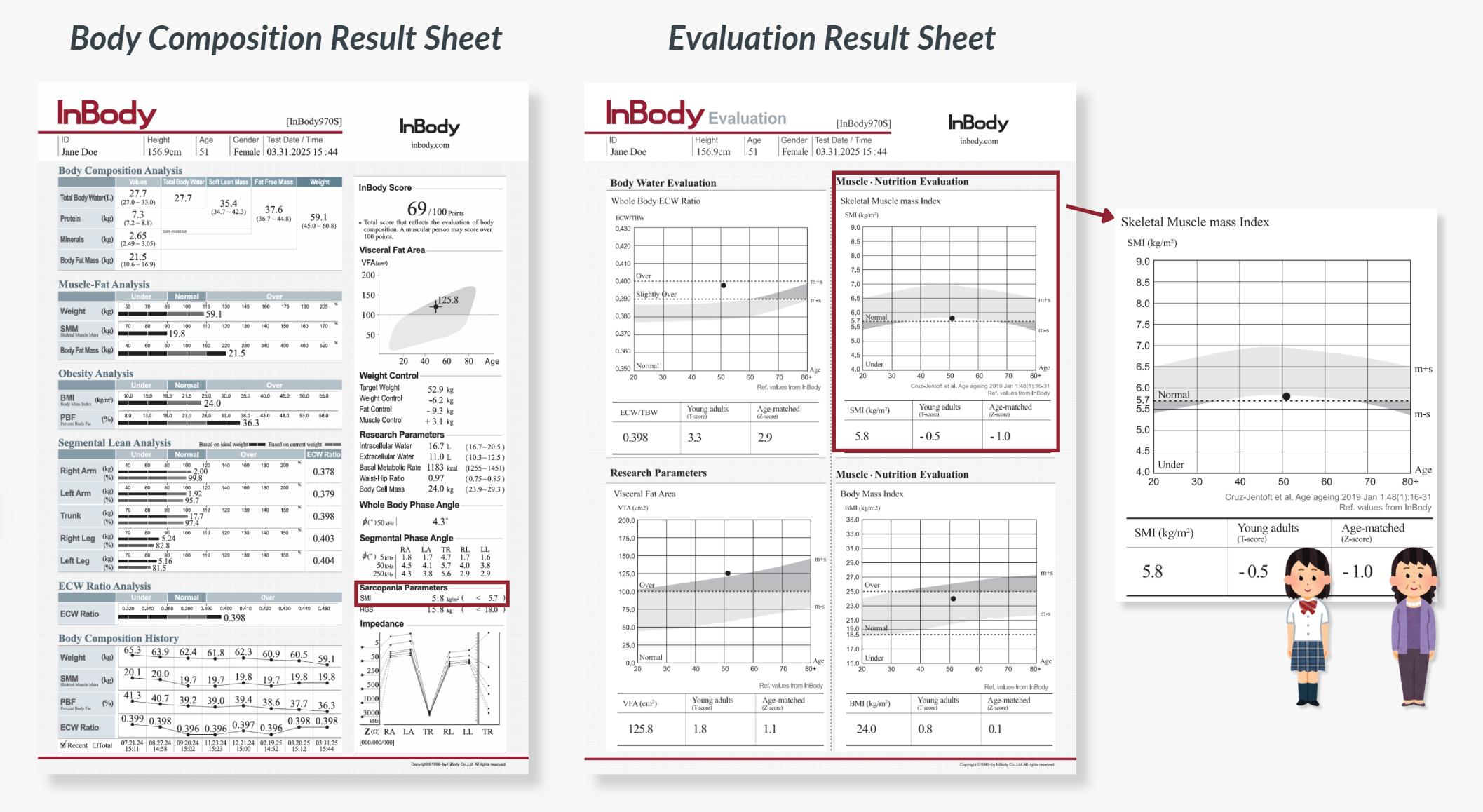
In addition, the Evaluation Result Sheet available exclusively in the InBody970S and BWA2.0S also offers a comprehensive analysis by comparing an individual’s body composition data with a reference population. It provides average and standard deviation graphs based on age and gender. Notably, it includes a Muscle-nutrition Evaluation Graph, allowing healthcare practitioners to visualize how a patient’s SMI compares to others of the same age and younger.
With these clear visual graphs and comparative data, healthcare practitioners can develop personalized interventions. For example, if a patient’s SMI is notably lower than the average for their age, targeted strategies such as resistance training, protein optimization, or nutrient supplementation can be implemented to improve muscle mass and overall muscle health.
Quick Muscle Strength Evaluation with InGrip
The InGrip Handgrip Strength Dynamometer measures handgrip strength, an important indicator of muscle function. After completing an InBody assessment, the InGrip can connect via Bluetooth to automatically record results.
Handgrip strength is measured using the maximum value from two trials with both hands, as recommended by AWGS 2025. After measurement, the results are displayed in the result sheet under “Sarcopenia Parameters”, along with the recommended cutoffs.
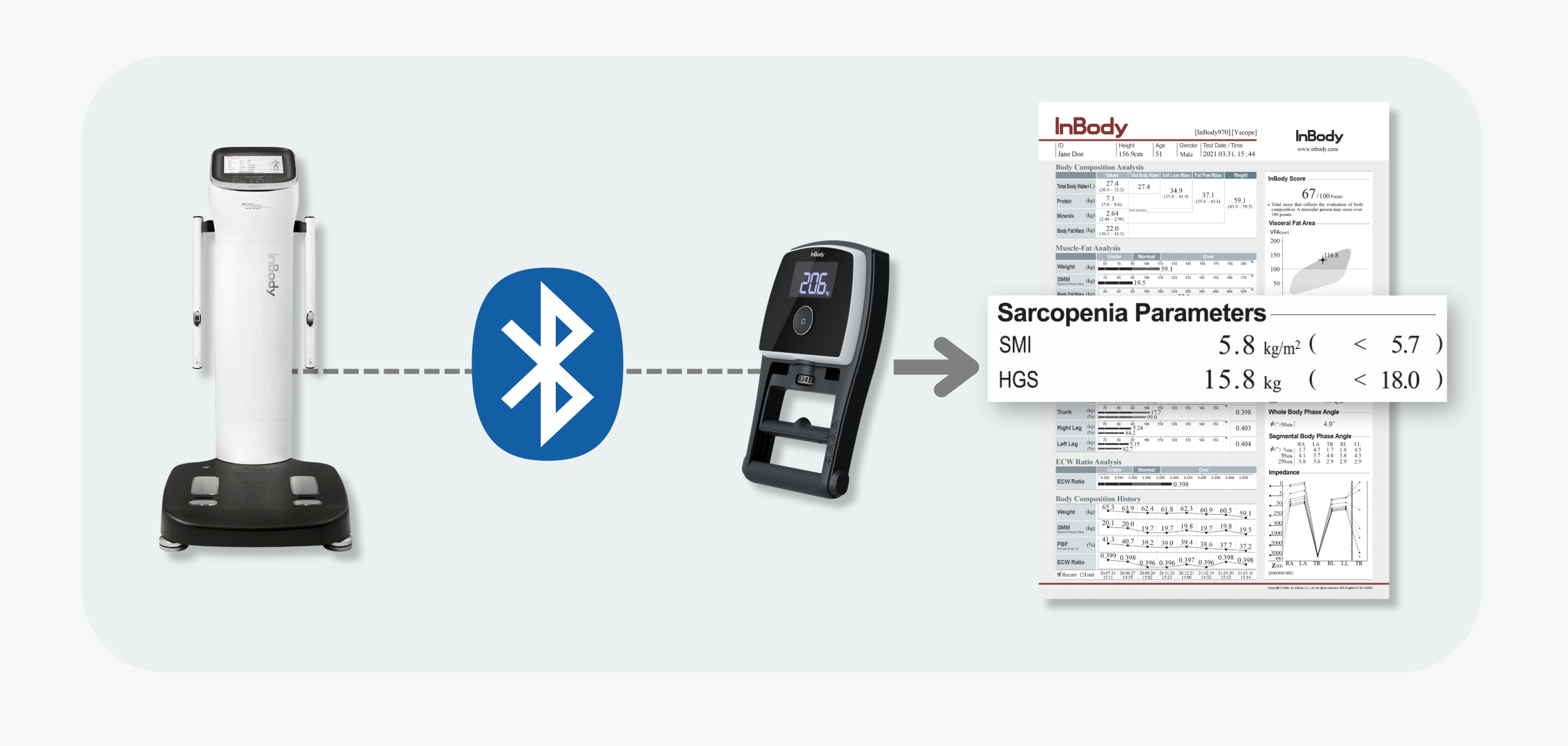
Together, InBody and InGrip provide a comprehensive, evidence-based solution to diagnose sarcopenia, fully aligned with AWGS 2025 recommendations.
Conclusion
The AWGS 2025 consensus marks a pivotal shift from merely diagnosing sarcopenia to promoting muscle health across the lifespan. Furthermore, early identification of low muscle mass and strength, particularly in middle-aged adults, is essential for preventing functional decline and supporting healthy aging.
With InBody Body Composition Analyzers and the InGrip Handgrip Strength Dynamometer, healthcare professionals now have a quick, precise, and evidence-based solution to assess skeletal muscle mass and muscle strength in line with AWGS 2025 recommendations.
By integrating these tools into clinical practice or community health programs, healthcare practitioners can detect sarcopenia risk early, monitor intervention effectiveness, and ultimately empower individuals to maintain muscle health and quality of life.
Reach out now to simplify sarcopenia assessment with InBody solutions! Learn more about handgrip strength and its role in assessing sarcopenia! Read here!